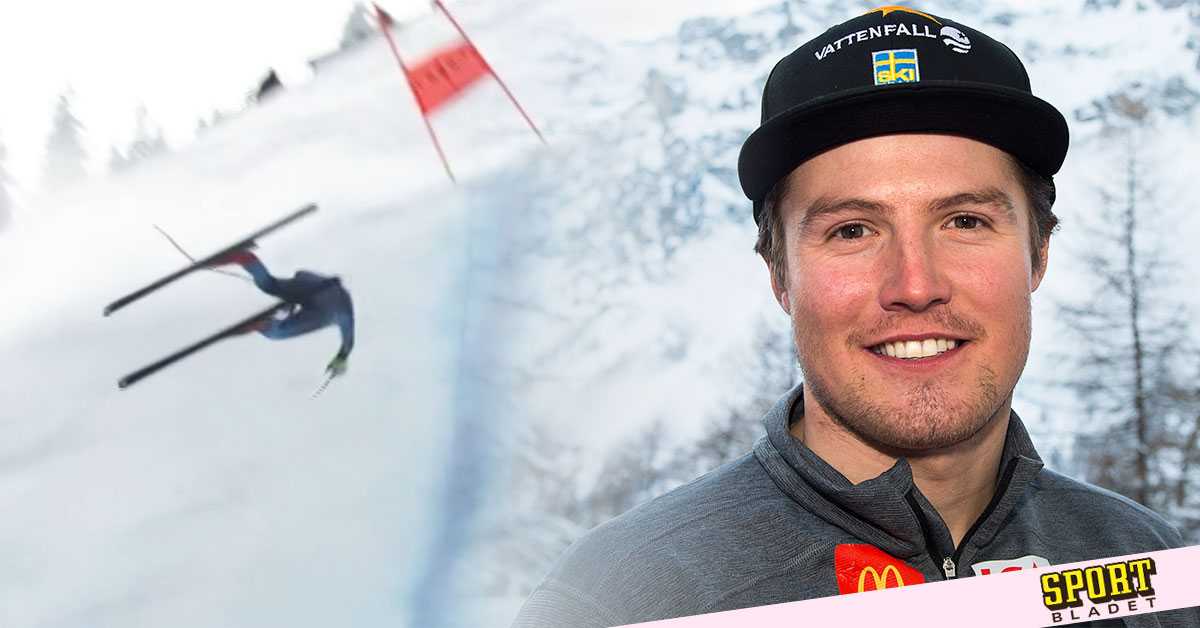
Alexander Köll's Hahnenkammrennen Horror: The Moment He Couldn't Feel His Legs
In the high-stakes world of alpine ski racing, spectacular crashes are an unfortunate, yet inherent, part of the sport. Few, however, send a collective shiver down the spine quite like the one experienced by Swedish World Cup alpine ski racer Alexander Köll at the legendary Hahnenkammrennen. What began as a routine descent quickly transformed into a terrifying ordeal, leaving fans and safety crews holding their breath as Köll lay motionless on the unforgiving Kitzbühel slope. The immediate aftermath was particularly harrowing: Köll himself reported a chilling sensation of not being able to feel his legs or toes. Yet, in a testament to incredible fortune and a touch of the extraordinary, the Alexander Köll accident ultimately revealed no fractures, a miraculous outcome that underscores both the dangers and the sheer luck sometimes involved in elite competition.
This incident, a pivotal moment in the career of a racer known for his resilience, quickly became a focal point for discussions on athlete safety and the sheer mental fortitude required to compete at the highest level. The Alexander Köll Unfall (accident) served as a stark reminder of the fine line between triumph and tragedy on the icy slopes.
The Terrifying Tumble: A Split-Second Gone Wrong
The Hahnenkammrennen, specifically its notorious downhill course, is widely regarded as one of the most demanding and dangerous races in the FIS Alpine World Cup circuit. It demands absolute precision, courage, and a healthy dose of aggression. On that fateful Friday, Alexander Köll, then 28, was pushing his limits, as all top racers do. However, a critical misstep – a 'felskär' or edge error – at high speed sent his carefully controlled descent spiraling into chaos.
Köll lost control, was launched violently into the air, and experienced a prolonged, terrifying flight before landing awkwardly on the hard-packed snow. His own recollection paints a vivid picture: "I just remember being in the air and thinking, 'Shit, it's taking so long before I land.' I just waited for the landing and was able to brace my body and absorb the energy from the impact." But the immediate aftermath on the ground was far more concerning. "Then there's a minute I don't remember. I lost my breath and just lay there," he recounted to SVT Sport.
The sight of Köll, visibly in distress and unmoving, triggered an immediate response from the dedicated safety team. Their swift arrival was crucial, but the initial assessment was alarming. When asked about his pain and sensations, Köll delivered the chilling news: "The thing was, I couldn't feel my legs and toes. They pinched me, and I didn't feel it." This temporary paralysis, even if fleeting, is every ski racer's worst nightmare, hinting at potential spinal cord damage or severe nerve trauma. With pain radiating through his knees, back, and legs, the decision was made to keep him immobilized until further medical evaluation could be performed.
The Adrenaline Paradox: Explaining the 'No Legs' Sensation
For those witnessing the Alexander Koll Unfall, Köll's initial inability to feel his lower limbs was deeply concerning. However, medical experts later provided a fascinating physiological explanation, turning a moment of terror into a lesson in the body's extreme responses under duress. It wasn't a catastrophic neurological injury, but rather a complex interplay of adrenaline and the extreme conditions of alpine racing.
- Adrenaline Overload: In moments of extreme trauma or danger, the body floods with adrenaline (epinephrine). This powerful hormone initiates the "fight or flight" response, diverting blood flow to vital organs and major muscle groups, while temporarily desensitizing peripheral areas and dulling pain perception to allow for immediate survival actions.
- Tight Ski Boots and Circulation: Professional ski boots are incredibly stiff and are buckled extremely tightly to provide maximum control and direct power transfer to the skis. This extreme compression, combined with the adrenaline-induced vasoconstriction (narrowing of blood vessels), can significantly restrict blood flow to the lower extremities and temporarily impair nerve sensation. Essentially, not enough blood reaches the nerves and tissues in the feet and lower legs to send clear signals back to the brain.
- Nerve Shock: While not a direct injury to the nerves, the immense impact and sudden trauma can cause a temporary "shock" to the nervous system, further contributing to a feeling of numbness or disconnect.
Understanding this physiological response brought immense relief. What felt like a severe neurological impairment was, in fact, a temporary, albeit terrifying, side effect of his body's extreme protective mechanisms. It highlights the incredible resilience of the human body, even as it navigates the brutal forces of a high-speed ski crash.
A Miraculous Diagnosis: Bruises, Not Fractures
Following the harrowing crash, Alexander Köll was swiftly airlifted to Innsbruck, a common destination for injured skiers due to its world-class medical facilities specializing in sports injuries. The hours that followed were undoubtedly fraught with anxiety, not just for Köll but for his family, team, and the entire alpine skiing community. Extensive examinations, including X-rays and scans, were conducted to determine the extent of his injuries. The relief when the results came back was palpable.
"I was actually really happy when the doctor said, 'Alex, you don't even realize how much luck you had. There are no major injuries,'" Köll recalled with profound gratitude. He had escaped without any fractures. Instead, his body bore the brunt of the impact in the form of severe bruising across his legs and some lingering pain in his left side. This diagnosis was nothing short of miraculous, especially considering the violence of the crash and his initial symptoms.
The doctors themselves were astonished by his fortune. In a sport where a bad fall often translates to season-ending ligament tears, broken bones, or worse, Köll's outcome was a testament to his physical conditioning, perhaps the way he managed to brace himself mid-air, and undoubtedly, pure luck. This moment of relief swiftly turned into a renewed determination to return to the slopes. The immediate focus shifted from injury despair to recovery ambition, particularly with the upcoming World Championships in Åre on the horizon.
The Road to Recovery and the Quest for VM Åre
For an elite athlete, an injury is not just a physical setback but a profound mental challenge. Alexander Köll’s resilience shone through immediately after his miraculous diagnosis. Instead of dwelling on the scare, his sights were set firmly on the future, specifically the FIS Alpine World Ski Championships in Åre. His commitment was unwavering: "Extremely realistic. I will do everything to be on the start line at the World Championships."
Köll wasted no time in formulating a detailed rehabilitation plan. He spent three crucial days in Innsbruck for intensive initial treatment before flying to Åre to continue his rehab and training. His ambitious goal was to be back on skis and testing them by the following weekend. Such rapid recovery and a strong mental resolve are hallmarks of top-tier athletes who understand that every moment counts in their pursuit of excellence.
Beyond his physical recovery, the outpouring of support from fans, fellow athletes, and the broader skiing community provided a significant boost. "I didn't even know I knew so many people who had my phone number," he confessed, touched by the multitude of messages and calls. This collective energy fueled his drive, reminding him of the strong bonds within the sport.
While this particular Alexander Köll Unfall had a fortunate outcome, it's important to note that his career wasn't without its challenges. Readers interested in the broader scope of his career and battles with injuries might find Alexander Köll's Injury Saga: The Ski Racer's Fight for Comebacks an insightful read, charting his journey through various physical trials before his eventual retirement from alpine skiing after the 2021-2022 season.
Conclusion: Resilience in the Face of Danger
Alexander Köll's crash at Hahnenkammrennen stands as a vivid narrative of peril, physiological paradox, and profound good fortune. The initial terror of not feeling his legs, a sensation that would paralyze most, was ultimately attributed to the body's extreme adrenaline response and the physics of his gear, rather than a catastrophic injury. His subsequent miraculous diagnosis – bruises instead of fractures – allowed him to pivot almost immediately from fear to focused recovery, with his eyes firmly fixed on the World Championships.
This incident is a powerful testament to the inherent dangers of alpine ski racing, the indispensable role of highly trained safety crews, and the incredible mental and physical resilience of athletes like Alexander Köll. It’s a story not just about a fall, but about the sheer luck that can dictate an athlete's fate, and the unwavering determination that defines their spirit, even after the most terrifying of tumbles. The Alexander Koll Unfall serves as a permanent reminder of the thin line between pushing limits and succumbing to the sport's unforgiving nature, and the sheer audacity it takes to return to the start gate.