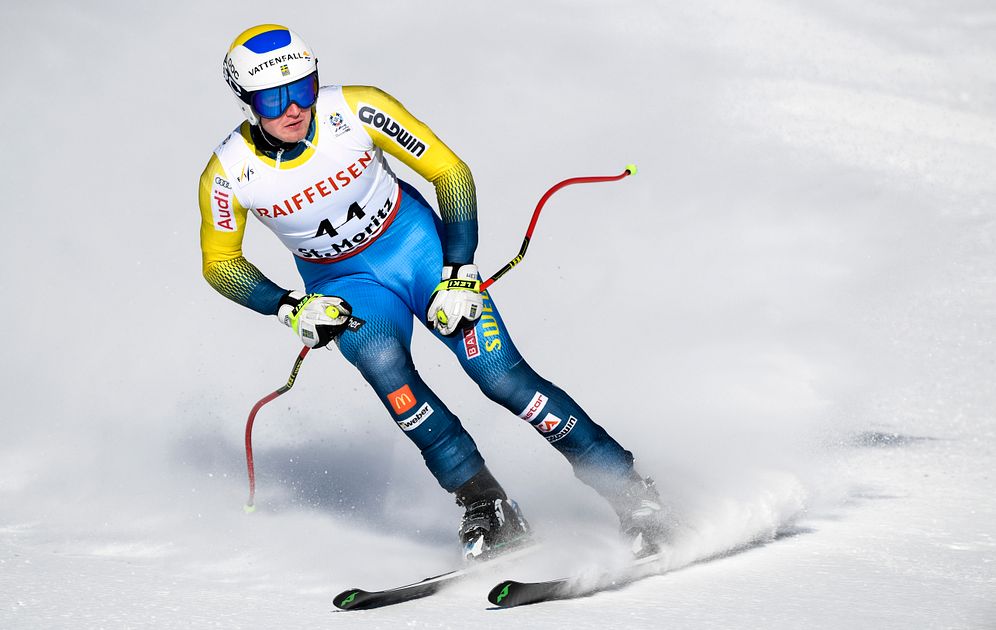
Alexander Köll: A Saga of Grit, Gravity, and the Unyielding Spirit of Ski Racing
In the high-octane world of alpine ski racing, where athletes hurtle down icy slopes at breathtaking speeds, crashes are an inherent, terrifying reality. Few embody this high-stakes existence and the sheer resilience required to navigate it quite like Swedish former World Cup alpine ski racer, Alexander Köll. His career, spanning from promising junior to seasoned World Cup competitor, was marked by incredible talent, fierce determination, and unfortunately, a series of harrowing accidents that ultimately led to his retirement. This article delves into the remarkable journey of Köll, tracing his path through devastating injuries, his unwavering fight to return, and the ultimate decision to step away from the sport he loved. The story of Alexander Köll's various injuries and comebacks is a testament to the human spirit's ability to endure, adapt, and make peace with physical limitations.
The Ascent of a Swedish Racer: Early Career and World Cup Dreams
Born on December 2, 1990, Alexander Köll quickly established himself as a formidable talent on the global alpine skiing scene. Representing Sweden since 2009, he steadily climbed the ranks, eventually making his mark on the prestigious World Cup circuit. From 2015 onwards, Köll was a consistent presence in every World Cup season, showcasing his skill and courage against the world's best. His career highlights included competing in two editions of the FIS Alpine World Ski Championships – in 2017 and 2019 – where he proudly represented his nation on skiing's grandest stages. Yet, the same high speeds and challenging courses that define World Cup skiing also bring with them immense risks, a harsh reality Köll would come to know intimately.
The Hahnenkamm Horror: "I Couldn't Feel My Legs"
The Kitzbühel Hahnenkamm race is legendary, synonymous with danger and extreme challenge. Its downhill course, the Streif, is considered one of the most demanding and perilous in the world. It was here, during a Friday downhill training run, that Alexander Köll experienced one of the most terrifying moments of his career. At just 28 years old at the time, his world momentarily stopped after a horrific crash. As he recounted to SVT Sport, a false cut led to him losing control, sending him airborne for what felt like an eternity before he landed awkwardly on the unforgiving slope. The immediate aftermath was nothing short of petrifying.
“I just remember being in the air and thinking ‘shit, it’s taking so long to land’,” Köll recalled. He instinctively tensed his body, attempting to brace for impact and dissipate the energy from the fall. But after landing, a minute of his memory vanished. He had the wind knocked out of him and lay prone on the ground, the silence punctuated only by the roaring adrenaline in his ears.
The most alarming sensation, however, was the profound numbness. “The thing was that I couldn't feel my legs and toes,” he stated. When the safety team arrived and pinched his limbs, he still felt nothing. This sensation, often a precursor to catastrophic spinal injury, filled him with dread. Fortunately, the medical understanding that followed provided a reassuring, if initially unbelievable, explanation. The immense adrenaline surge in his body, combined with the extreme tightness of his ski boots, had temporarily restricted blood flow to his lower extremities, leading to the frightening loss of sensation. This crucial detail, not immediately apparent at the scene, offered a glimmer of hope amidst the agony in his knees, back, and legs. This particular Alexander Köll Unfall, or accident, could have been career-ending, or worse, but sheer luck and his body's unique response prevented the worst outcomes.
A Miraculous Escape and Fierce Determination
Flown swiftly to Innsbruck for extensive medical examinations, Köll awaited the verdict with bated breath. The relief that washed over him upon hearing the news was immense: no fractures. "I was really damn happy when the doctor said, 'Alex, you don't understand how lucky you were. There are no major injuries.'" He was left with significant bruising across his legs and lingering pain, but the devastating injuries he feared had been averted. This truly was a testament to both his physical conditioning and perhaps a stroke of pure fortune.
Despite the severity of the crash and the immediate pain, Köll's mind immediately turned to recovery and his next goal: the upcoming World Championships (VM) in Åre. His determination was unwavering. "Extremely realistic," he affirmed regarding his readiness for VM. "I will do everything to be at the start of the VM. I have a good plan with the rehabilitation." His ambitious plan involved intense rehab in Innsbruck, followed by a swift return to Åre to continue training, with the goal of being back on skis within days. This incredible drive underscored the warrior spirit of elite athletes, who often push through pain and fear with singular focus.
The outpouring of support from fans, friends, and fellow competitors also provided a significant boost. Köll was overwhelmed by the sheer volume of messages and calls, describing it as an immense source of energy, a reminder of the community that rallies around athletes in their toughest moments.
The Val d'Isere Crash: A Turning Point on the Path to Retirement
While the Hahnenkamm crash was harrowing, Alexander Köll's journey through injury was not yet over. On December 10, 2020, during a practice session in Val d'Isere, he suffered another severe accident. While specific details of this Alexander Koll Unfall are less publicized, the outcome was equally impactful, if not more so, on his career trajectory. This crash, coming almost two years after the Hahnenkamm incident, added to the cumulative toll on his body and mind. Each major injury, especially in a high-impact sport like alpine skiing, carries with it not just the immediate physical damage but also the long-term wear and tear, the psychological burden of recovery, and the nagging question of how much more the body can endure.
For an elite athlete, repeated serious injuries aren't just setbacks; they are profound tests of will and physical integrity. They often lead to extended periods away from competition, intensive rehabilitation, and the constant battle to regain peak form and, crucially, confidence. The Val d'Isere accident likely compounded the effects of his previous crashes, making the path forward increasingly arduous.
The Difficult Decision: Retiring from Elite Alpine Skiing
After navigating the highs and lows of professional skiing, the intense training regimes, the adrenaline of competition, and the pain of recovery, Alexander Köll made the momentous decision to retire from alpine skiing. On July 25, 2022, following the 2021-2022 season, he announced he was hanging up his skis for good. This decision, though likely agonizing, was a testament to his maturity and self-awareness. It reflected a deep understanding of his body's limits and the long-term implications of continuing in a sport that demands so much. The series of Alexander Köll Unfälle had taken their toll.
Retirement for an elite athlete is rarely an easy choice. It means letting go of a life defined by competition, rigorous training, and the pursuit of excellence. For Köll, it was undoubtedly a culmination of factors: the physical strain from multiple significant crashes, the mental fortitude required to continually overcome fear, and perhaps a desire to pursue a healthier, more sustainable future. Knowing when to stop, particularly when passion still burns bright, is a form of courage distinct from the bravery displayed on the race course.
Beyond the Slopes: Lessons from Alexander Köll's Legacy
Alexander Köll's career, punctuated by remarkable resilience in the face of daunting adversity, offers invaluable lessons for aspiring athletes and anyone facing significant challenges:
- The Unyielding Power of Perseverance: Despite suffering crashes that would deter many, Köll consistently fought his way back, showcasing a remarkable commitment to his sport.
- Understanding the Body's Signals: His experience with the "no feeling in legs" scare highlights the body's complex responses to trauma and the importance of accurate medical assessment. It also underscores the need for athletes to listen to their bodies and prioritize long-term health.
- The Role of Support Systems: The overwhelming support he received after his Hahnenkamm crash provided vital energy for his recovery, emphasizing the importance of community and encouragement in tough times.
- Courage Beyond the Race: The decision to retire, especially for someone who has overcome so much, demonstrates a different kind of courage—the courage to prioritize well-being and embrace new chapters.
His story serves as a vivid reminder of the brutal beauty of alpine skiing, where moments of triumph are often intertwined with instances of profound risk. The constant battle against gravity, ice, and personal limits defines the sport and its heroes.
Alexander Köll's journey through professional alpine skiing is a compelling narrative of ambition, breathtaking skill, and formidable resilience. From the early days of representing Sweden to battling back from life-threatening crashes, he exemplified the spirit of a true competitor. His career, marked by significant Alexander Köll Unfälle, reminds us of the inherent dangers of elite sports but also the incredible strength of the human will to overcome. As he transitions into the next phase of his life, his legacy as a courageous racer who knew when to push and when to preserve will undoubtedly continue to inspire.